Ada Lovelace, 1843: the “can AI create?” debate is over 180 years old
In 1843, a translator added notes to a technical paper that were longer than the paper itself. In the last one, she wrote that the machine originates nothing. The debate she opened is back with every language model.
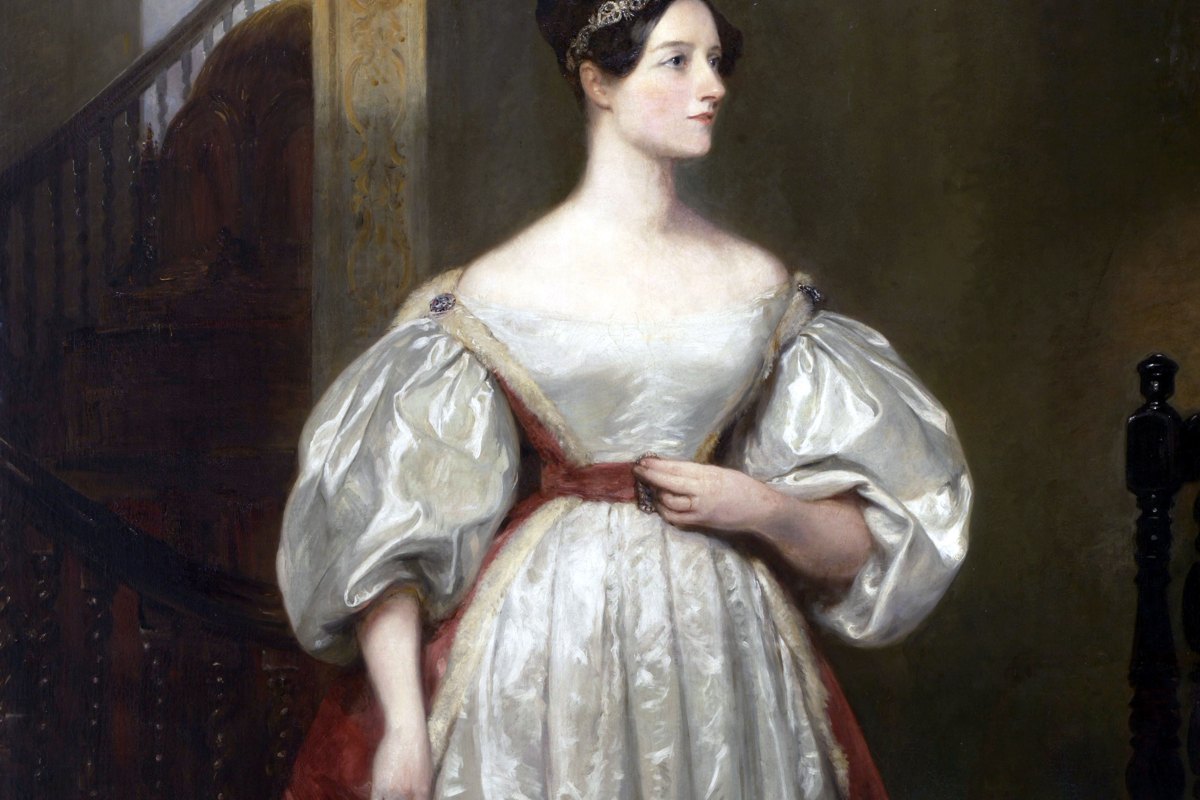
When an executive asks me whether AI “really creates”, I think of a 27-year-old woman who asked the question before any computer existed. In 1843, Ada Lovelace published an annotated translation of a paper on Charles Babbage’s Analytical Engine. In the last note she wrote a sentence that still turns up in every debate about artificial intelligence: the machine originates nothing, it does what we know how to order it to do.
A hundred and eighty-three years later, the question is still open. But for an organisation deploying a language model, I think the useful half of her sentence is the second one.
A translation that became a treatise
In October 1842, the Italian military engineer Luigi Menabrea published in French, in the Bibliothèque Universelle de Genève, a description of Babbage’s Analytical Engine: a general calculating machine driven by punched cards. Ada Lovelace, Lord Byron’s daughter, translated it into English for Richard Taylor’s Scientific Memoirs in 1843.
She did more than translate. She added seven notes, A to G, each signed with her initials, “A. A. L.”. In the 1843 edition, the memoir runs from page 666 to page 690, including the editor’s preface. The notes run from page 691 to page 731, plus a separate plate. The commentary is longer than the text it comments on.
How much of the notes is Lovelace’s and how much is Babbage’s is debated by biographers, as the Computer History Museum points out. The text was published under her initials, and that is the text I quote.
What she saw in the machine
The notes go well beyond arithmetic. Three passages stand out for me.
- Weaving. In Note A she writes that the Analytical Engine “weaves algebraical patterns just as the Jacquard-loom weaves flowers and leaves”. The loom’s punched cards become calculating instructions.
- Music. Also in Note A: if the relations between pitched sounds could be expressed in the engine’s notation, it “might compose elaborate and scientific pieces of music of any degree of complexity or extent”.
- The program. Note G ends with a table setting out, operation by operation, how the engine would compute the Bernoulli numbers. The table is often described as the first published computer program, although Lovelace presented it more modestly as a complete view of the successive changes in the machine.
So she pictured a machine that manipulates symbols, not just numbers. That is exactly what a language model does with words.
Note G: the brake
Then, at the start of Note G, her tone changes. She wants, she writes, to guard against “exaggerated ideas” about the engine’s powers. And on page 722 she sets this down:
The Analytical Engine has no pretensions whatever to originate any thing. It can do whatever we know how to order it to perform. It can follow analysis; but it has no power of anticipating any analytical relations or truths. Its province is to assist us in making available what we are already acquainted with.
The full text is available in the 1843 edition transcribed on Wikisource. The sentence is short, and it has two halves. The first is a philosophical claim: the machine is not the origin of anything. The second is a job description: the machine does what we know how to order it to do. The two halves have not aged the same way.
1950: Turing replies
A hundred and seven years later, Alan Turing published “Computing Machinery and Intelligence” in the journal Mind, the paper that introduced the imitation game. In it he reviews the objections to the idea that a machine could think. The sixth one has a name: “Lady Lovelace’s Objection”.
A detail I like: Turing quotes the sentence without the word “whatever” and dates the memoir to 1842. Even famous quotations drift as they travel.
His reply fits in one sentence: “Machines take me by surprise with great frequency.” Machines often surprise him, he explains, because he does not work out in advance everything they will do. He adds that we wrongly assume a mind sees at once all the consequences of the facts it is given. That is not true of us, nor of the machine. Later in the paper he suggests another route: machines that learn.
Why the debate is back with LLMs
A language model has not been given line-by-line orders like Babbage’s engine. It has been trained on vast amounts of text, and it produces sentences nobody wrote before. Hence the old question returns: is this creation?
I have no philosophical answer to offer. I have a practitioner’s observation: whenever an LLM “surprises” in production, the surprise almost always comes from what nobody wrote down. A vague instruction, a missing document, an edge case nobody anticipated. That is Turing’s surprise: we had not worked out the consequences of what we gave it.
What it changes for an organisation
The second half of Lovelace’s sentence is a work plan. If the machine does what we know how to order it to do, then the work is in the order. In practice I split it into three parts:
- The brief. The task written down, with its scope and what the system must not do. If two people on the team would not write it the same way, the model will not do it the same way either.
- The data. The documents, procedures and examples the model has in front of it. Whatever is missing, it guesses.
- The acceptance criteria. What makes an answer good, measured on a real sample before go-live, then tracked over time.
You also need a business owner: someone who writes the order, judges the result and can change the process around it. That is often where projects stall, as I explain in why AI pilots fail to reach production.
The question “does AI create?” will stay open for a long time. The question “do we know how to tell it what to do?” can be settled in a few days of scoping. That is where I start.
In the same series
The other episodes of “the ancestors of LLMs”, in chronological order:
- Markov, 1913: Pushkin letter by letter
- Shannon, 1948: a book opened at random
- Turing, 1950: the test, and the wrong question
- Dartmouth, 1956: the first underestimated AI quote
- Rosenblatt, 1958: the Perceptron’s promise
- ELIZA, 1966: a machine that understands nothing
- Jelinek, 1980s: statistics beat grammar
- Asimov, 1991: two intelligences, not one
Frequently asked questions
What did Ada Lovelace write about machine creativity?
In Note G of her translation of Menabrea’s memoir, published in 1843 in the Scientific Memoirs, she wrote: “The Analytical Engine has no pretensions whatever to originate any thing. It can do whatever we know how to order it to perform.” The machine creates nothing; it does what we know how to order it to do.
What is Lady Lovelace’s objection?
It is the name Alan Turing gave in 1950, in “Computing Machinery and Intelligence”, to the idea that a machine only does what it is told. His reply was that machines often surprise him, because nobody works out in advance all the consequences of what they are given.
What does this debate mean for an AI project in a company?
That most of the work is in the request: a written brief with its scope, the documents and data the model should use, and acceptance criteria measured on a real sample. Plus a business owner who writes the request and judges the result.