Dartmouth 1956: the first AI quote in history promised an advance in one summer
In August 1955, four researchers asked for two months, ten people and 13,500 dollars to make “a significant advance” on machine intelligence. Along the way, they coined the phrase “artificial intelligence.” Seventy years later, that first quote is still a lesson in scoping.
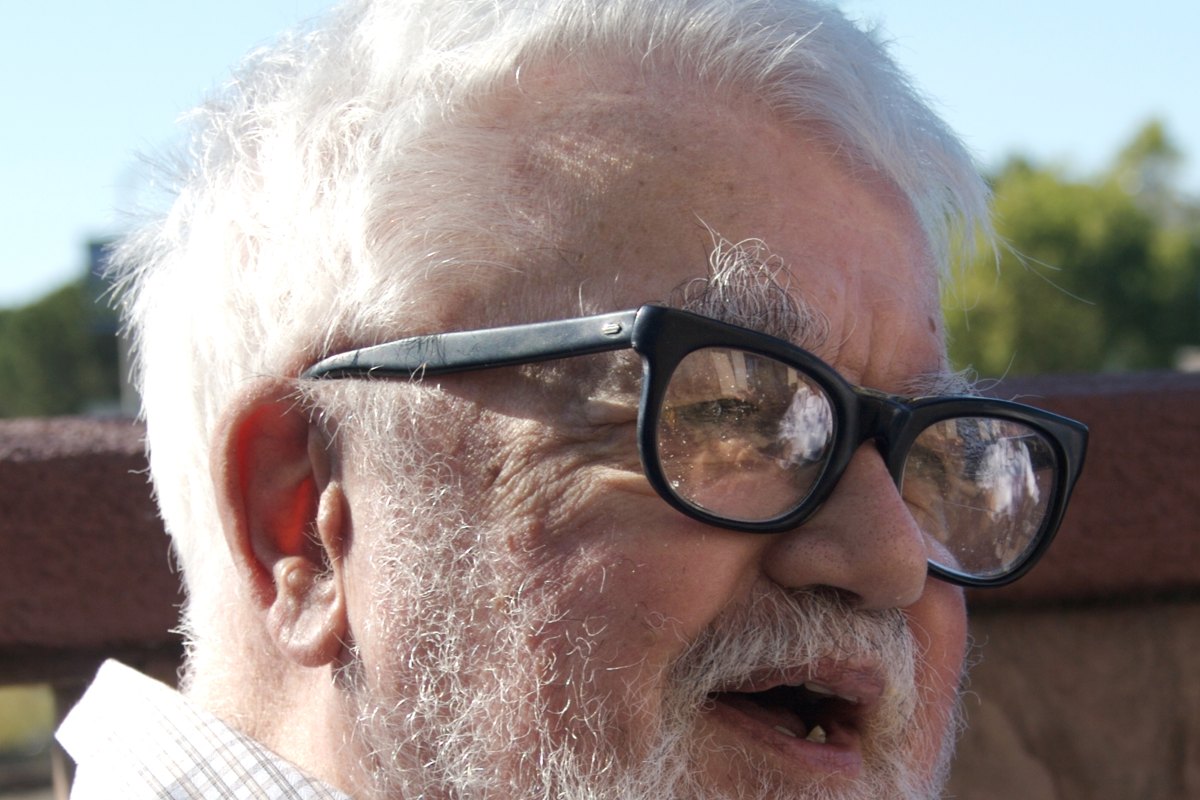
On 31 August 1955, four researchers signed a seventeen-page typed funding request. Its first paragraph became famous. I reread it often, because it looks like many of the commercial proposals I still see in 2026.
“We propose that a 2 month, 10 man study of artificial intelligence be carried out during the summer of 1956 at Dartmouth College in Hanover, New Hampshire.”
Two months, ten people, one summer. A few lines further down comes the promise: “We think that a significant advance can be made in one or more of these problems if a carefully selected group of scientists work on it together for a summer.” A significant advance, in one summer, with a well-chosen group.
Four signatories and a new phrase
The signatories were John McCarthy, assistant professor of mathematics at Dartmouth, Marvin Minsky, then a Junior Fellow at Harvard, Nathaniel Rochester of IBM, and Claude Shannon of Bell Telephone Laboratories. The request went to the Rockefeller Foundation.
The text rests on a very broad working hypothesis: “every aspect of learning or any other feature of intelligence can in principle be so precisely described that a machine can be made to simulate it.” It lists seven topics, including automatic computers, the use of language by machines, neuron nets, self-improvement and creativity.
McCarthy later wrote that the proposal was, “so far as I know,” the first use of the phrase “artificial intelligence.” In a 2005 interview for the Simons Foundation, he explained the choice: he wanted to “nail the flag to the mast,” so that participants would know what the subject was. Not automata in general. Artificial intelligence.
The quote: 13,500 dollars
The proposal includes a detailed budget. As far as I know, it is the first quote for an AI project:
- 6 salaries of $1,200: $7,200.
- 2 graduate student salaries of $700: $1,400.
- Travel and rent for 8 people, averaging $300: $2,400.
- Secretarial and organizational expenses: $850.
- Additional travel: $600.
- Contingencies: $550.
Total: $13,500. The text notes that participants from Bell Labs and IBM would be paid by their employers. The scope was a summer seminar. The goal was intelligence.
The funder’s answer: a “modest gamble”
The Rockefeller Foundation did not say no. It reduced the stake. According to the Rockefeller Archive Center, Robert S. Morison, the Foundation’s director of biological and medical research, offered $7,500 for five weeks. His letter to McCarthy of 30 November 1955 reads:
“This suggests a modest gamble for exploring a new approach, but there is a great deal of hesitancy about risking any very substantial amount at this stage.”
I find that sentence remarkable. The funder did not think the idea was bad. He found it “very challenging for the long run” and “difficult to grasp very clearly.” So he funded a limited trial. That is exactly the stance I recommend today.
What happened in summer 1956
The seminar ran from 18 June to 17 August 1956, according to Grace Solomonoff, who is writing a book about it. Only three participants stayed for all eight weeks: McCarthy, Minsky and Ray Solomonoff. Everyone else came and went as their schedules allowed.
In 2006, for the fiftieth anniversary, the philosopher James Moor reviewed it in AI Magazine. McCarthy acknowledged that the project did not live up to expectations in terms of collaboration. Attendees did not come at the same time, and most kept to their own research agenda. Moor’s conclusion: there was “no agreement on a general theory of the field.” He also notes real advances of the period, including the Logic Theory Machine by Newell, Shaw and Simon.
McCarthy himself was the most direct. In the 2005 interview:
“I thought we would make substantial progress towards human-level artificial intelligence that summer. And we didn’t.”
In the same interview, he recalls that the Foundation gave only half the amount requested, and that the results did not match his “rather grandiose hopes.” He adds that human-level AI “has turned out to be a very difficult scientific problem, and it isn’t solved yet.”
The link with LLMs
The second topic in the proposal is titled “How Can a Computer be Programmed to Use a Language.” The authors write that “a large part of human thought consists of manipulating words according to rules of reasoning and rules of conjecture.” The third covers “Neuron Nets,” with this assessment: “Partial results have been obtained but the problem needs more theoretical work.”
Seventy years later, LLMs are neural networks that handle language. The Transformer architecture behind them was published in 2017, in “Attention Is All You Need.” Both intuitions of 1955 were right. The timeline was not: one summer announced, decades of actual work.
At the fiftieth-anniversary conference in 2006, McCarthy considered human-level AI “likely but not assured by 2056.” The man who had asked for one summer now spoke in half-centuries.
What it changes for an organization
The Dartmouth proposal was not a mistake. It is a brilliant text, signed by brilliant people, that launched an entire field. But it is also a typical scoping: a huge goal, a short timeline, a small team and no success measure. I still see that pattern in AI quotes sent to small and mid-sized companies.
A scoping that promises everything in two months is a warning sign. A good AI quote fits in four lines:
- One task. Not “intelligence,” not “automate customer service.” One precise task, with a volume.
- One measure. An indicator, its current value, and the target.
- One business owner. A person who knows the work, judges the errors and decides what happens next.
- Out of scope. What the system will not do. It is often the most useful line in the quote.
On the buyer’s side, the Rockefeller Foundation’s stance still holds: a “modest gamble.” Fund a limited trial, measure, then expand. Minsky said something close at the 2006 conference: AI can never be a science until it publishes what fails as well as what succeeds. In a project, that means writing down what did not work, and why.
I have described this move from demo to real use in why AI pilots stall before production.
Primary source: J. McCarthy, M. L. Minsky, N. Rochester, C. E. Shannon, “A Proposal for the Dartmouth Summer Research Project on Artificial Intelligence,” 31 August 1955.
In the same series
The other episodes of “the ancestors of LLMs”, in chronological order:
- Ada Lovelace, 1843: the engine “originates nothing”
- Markov, 1913: Pushkin letter by letter
- Shannon, 1948: a book opened at random
- Turing, 1950: the test, and the wrong question
- Rosenblatt, 1958: the Perceptron’s promise
- ELIZA, 1966: a machine that understands nothing
- Jelinek, 1980s: statistics beat grammar
- Asimov, 1991: two intelligences, not one
Frequently asked questions
What was the 1956 Dartmouth conference?
The Dartmouth Summer Research Project on Artificial Intelligence was a summer seminar held at Dartmouth College from 18 June to 17 August 1956. It was proposed on 31 August 1955 by John McCarthy, Marvin Minsky, Nathaniel Rochester and Claude Shannon, and it is often seen as the founding event of AI as a research discipline.
Who coined the term “artificial intelligence”?
John McCarthy, in the Dartmouth proposal dated 31 August 1955. He wrote that it was, as far as he knew, the first use of the phrase, and he explained that he chose it so that participants would know exactly what the subject was.
How much did the Dartmouth project cost?
The proposal estimated the budget at 13,500 dollars, mostly summer salaries, travel and rent. The Rockefeller Foundation offered 7,500 dollars for five weeks, calling it a “modest gamble” on a field that was still hard to grasp.